
The King of Comedy
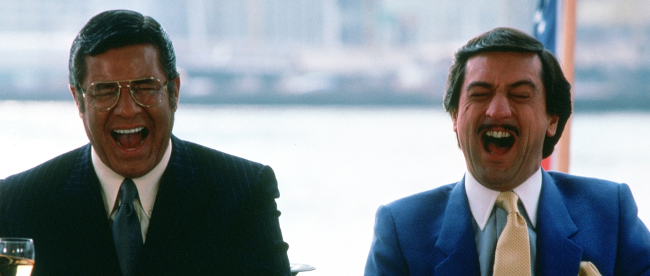
The King of Comedy follows Robert De Niro’s Rupert Pupkin, a mentally-unbalanced aspiring comic, as he kidnaps a famous talk-show host (Jerry Lewis’ Jerry Langford) and holds him hostage, with the movie revolving around the battle of wills that subsequently ensues between the two men. It’s clear immediately that director Martin Scorsese, working from Paul D. Zimmerman’s screenplay, is looking to cultivate the atmosphere of a subdued character study, as the filmmaker places an ongoing emphasis on De Niro’s seriously disturbed figure and details Pupkin’s cringe-worthy day-to-day activities. (The latter is made emblematic by a fantastic stretch in which Pupkin repeatedly visits Langford’s office, to progressively disastrous results.) The movie’s watchable vibe is undoubtedly heightened by De Niro’s consistently transfixing performance, with the actor stepping into the shoes of his thoroughly compelling character to a degree that’s never anything less than captivating. It’s just as clear, however, that Scorsese’s low-key sensibilities pave the way for a second half that’s not as engrossing or engaging as it should be, with the movie ultimately building to a padded-out final act that’s lacking the punch Scorsese is clearly aiming for. (The film’s conclusion, however, is just about perfect in its ambiguity.) The end result is an erratic yet rewarding little drama that remains a high-water mark in terms of De Niro’s onscreen work, and it is, for the most part, not difficult to see why The King of Comedy has become something of a cult item in the years since its 1982 release.
*** out of ****
Leave a comment
You must be logged in to post a comment.