
Star Trek Beyond
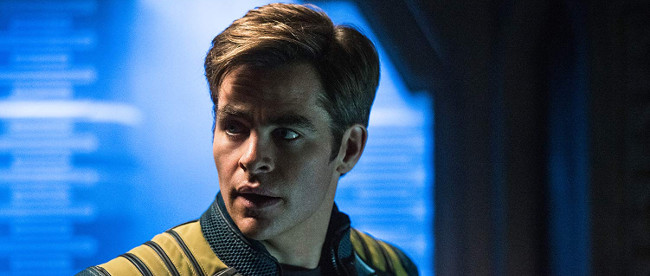
Though riddled with problems, Star Trek Beyond nevertheless stands as a very mild improvement over its immediate predecessor, 2013’s Star Trek Into Darkness – as the movie tells a relatively interesting (and wholly original) story that feels as though it could’ve emerged from the original series. The film follows the Enterprise crew as they answer a distress call and are almost immediately attacked by a vicious race of aliens, with the remainder of the proceedings revolving around the heroes’ subsequent efforts at recovering from that deadly incursion and, eventually, fighting back. Before it gets to its typically action-packed narrative, however, Star Trek Beyond kicks off with a low-key and unexpectedly engrossing stretch detailing the crew’s activities since Into Darkness. The initial emphasis on character development over spectacle is refreshing, to be sure, although it’s inevitably not long before director Justin Lin bombards the viewer with the first of many action sequences. (It doesn’t help, certainly, that Lin and cinematographer Stephen F. Windon have infused the picture with muddy and needlessly dim visuals that render such moments all but indecipherable.) And while the movie does flounder in the aftermath of that big first-act set-piece, Star Trek Beyond eventually recovers and settles to become a fairly engaging Trek tale that benefits from solid chemistry between the lead actors. (The growing bond between Zachary Quinto’s Spock and Karl Urban’s Bones, for example, is impossible to resist.) It’s just a shame, then, that the film’s villain, Idris Elba’s Krall, fares so poorly, as the character comes off as a garden-variety psycho whose motives are murky (at best!) – which ultimately ensures that the climactic battle doesn’t quite pack the punch that Lin has surely intended. There is, in the end, little doubt that Star Trek Beyond‘s success is due mostly to the effectiveness of the cast, and it’s impossible not to wish that future installments would dial down the special-effects excess and focus instead on the justifiably iconic protagonists.
*** out of ****
Leave a comment
You must be logged in to post a comment.