
Breakfast at Tiffany’s
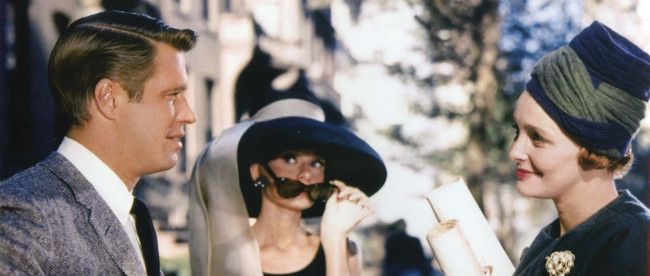
Based on Truman Capote’s novel, Breakfast at Tiffany’s follows George Peppard’s Paul Varjak as he moves into a New York City apartment building and immediately befriends an unusual young woman named Holly Golightly (Audrey Hepburn). The film, like its source material, doesn’t contain much in the way of a plot, as the meandering narrative, for the most part, details the day-to-day exploits of the two central characters – with the leads’ almost incredible charisma, Hepburn especially, going a long way towards compensating for the less-than-eventful nature of George Axelrod’s screenplay. Blake Edwards’ lighthearted treatment of the material ensures that Breakfast at Tiffany’s, generally speaking, boasts an irresistibly playful and charming vibe, and there’s little doubt that the movie benefits substantially from the inclusion of a few captivating sequences (eg Paul and Holly go on a shopping trip, Holly sings Moon River on her windowsill, etc). It’s just as clear, however, that the film’s overlength becomes more and more problematic as time progresses, with the movie’s palpably underwhelming final stretch compounded by an increased emphasis on incongruously dark elements and plot twists. By the time the appealingly upbeat and feel-good conclusion rolls around, however, Breakfast at Tiffany’s has, despite its erratic atmosphere, established itself as a captivating romantic comedy that lives up to its place as a classic of the genre. (This is, of course, despite Mickey Rooney’s astonishingly racist turn as Holly’s Japanese neighbor, Mr. Yunioshi.)
*** out of ****
Leave a comment
You must be logged in to post a comment.