
12 Years a Slave
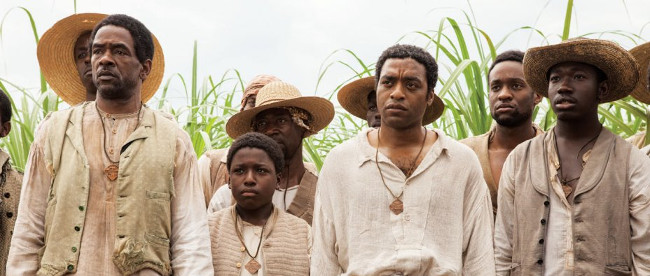
12 Years a Slave follows Chiwetel Ejiofor’s Solomon Northup, a free black man living in pre-Civil War New York, as he’s abducted and sold into slavery, with the movie detailing Solomon’s subsequent exploits as he moves from one owner to the next – including Benedict Cumberbatch’s Ford and Michael Fassbender’s Epps. Filmmaker Steve McQueen, working from a script by John Ridley, does a fantastic job of immediately luring the viewer into the deliberately-paced proceedings, as 12 Years a Slave boasts an engrossing opening half hour revolving around Northup’s abduction and initial induction into the slave trade – with the strength of this stretch heightened by Ejiofor’s riveting, career-best turn as the central character. The film, however, segues into a stagnant midsection that’s primarily focused on Northup’s day-to-day activities in bondage, with Ridley’s screenplay painting a vivid picture of Northup’s miserable existence by stressing, over and over, the various indignities to which he’s being subjected. It’s just not, despite the flawless direction and performances, terribly interesting, with the only respite from the pervasively repetitive atmosphere coming in the form of several stand-out sequences and an influx of familiar faces in the supporting cast (which includes, among others, Paul Giamatti, Alfre Woodard, and Garret Dillahunt). Having said that, 12 Years a Slave improves immeasurably in its third act – with a short-lived (and riveting) appearance by Brad Pitt as a Canadian abolitionist triggering a climactic stretch that’s far more involving and emotionally devastating than one might’ve anticipated. The end result is a meticulously made, sporadically captivating, and yet palpably overlong effort that’s rarely as electrifying as its subject matter, which is a shame, really, given the movie’s wealth of positive attributes and the potential of its premise.
*** out of ****
Leave a comment
You must be logged in to post a comment.