
Southpaw
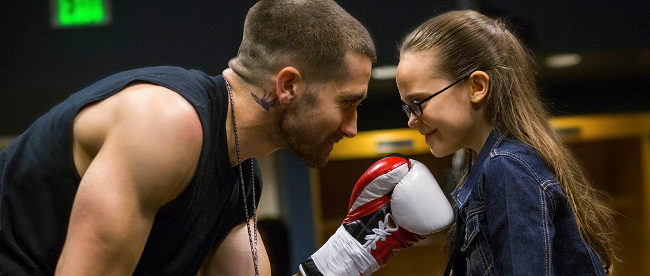
A marked change of pace for director Antoine Fuqua, Southpaw follows Jake Gyllenhaal’s Billy Hope, a top-ranked boxer, as he’s forced to make serious changes to his personal life after a devastating tragedy. Southpaw boasts a strong first act that’s heightened by an atmosphere of gritty realism, and it’s clear, certainly, that this vibe is perpetuated by star Gyllenhaal’s absolutely captivating turn as the central character – with the actor’s Oscar-ready performance matched by an above-average supporting cast that includes Rachel McAdams and Forest Whitaker. The decidedly familiar trajectory of the movie’s narrative is, as such, not quite as problematic as one might’ve assumed, and it’s worth noting, too, that Kurt Sutter’s screenplay does contain a handful of surprising developments (eg there’s a key death early on that’s admittedly quite shocking). Southpaw’s tone changes considerably as it progresses into its increasingly melodramatic (and deliberately-paced) midsection, however, with Sutter’s script going in a direction that could most accurately described as familiar – as the emphasis is placed on Billy’s attempts to rebuild himself as a better, stronger fighter (ie this is straight out of virtually all the Rocky flicks). And although the climactic bout doesn’t quite possess the intensity that Fuqua has surely intended, Southpaw’s second half benefits substantially from a continuing emphasis on the sweet relationship between Gyllenhaal’s character and his young daughter (Oona Laurence’s Leila) – which, in the end, confirms the movie’s place as a far-from-fresh drama that nevertheless manages to pack a punch (so to speak).
*** out of ****
Leave a comment
You must be logged in to post a comment.