
Lincoln
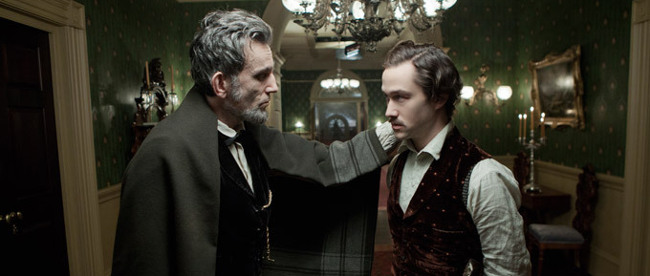
Directed by Steven Spielberg, Lincoln follows Daniel Day-Lewis’ title character as he attempts to pass an amendment banning slavery and involuntary servitude. Filmmaker Spielberg, armed with Tony Kuchner’s dense screenplay, delivers a hit-and-miss endeavor that is, lamentably, more the latter than the former, as the picture, which runs a palpably overlong 150 minutes, has been saddled with a dry, procedural-like structure that becomes less and less interesting (or compelling) as time progresses – with the arms-length atmosphere compounded by a general absence of drama or character development. (Indeed, the picture is at its best during its scant moments of personal conflict, including Lincoln’s impassioned speech to his cabinet and his emotional argument with wife Mary (Sally Field).) It’s clear, then, that Lincoln‘s saving grace is Day-Lewis’ predictably enthralling turn as the complex central figure, as the actor does a superb job of delivering a performance that feels completely convincing and lived-in (ie this is no mere impression, ultimately) – with Day-Lewis’ top-notch work matched by a murderers’ row of familiar faces within the stacked supporting cast. By the time the triumphant (yet uninvolving) final stretch rolls around, however, Lincoln has confirmed its place as a misfire that might’ve worked had it topped out at around an hour and a half – which is a shame, certainly, given the effectiveness of its lead actor’s committed efforts.
** out of ****
Leave a comment
You must be logged in to post a comment.