
Guilty by Suspicion
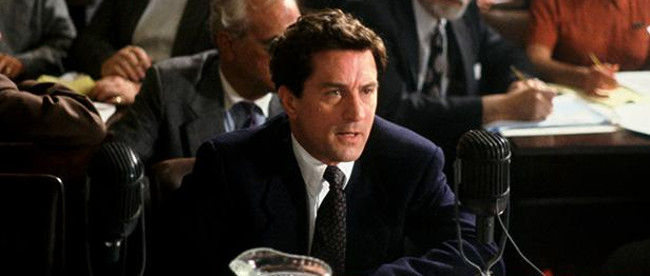
Set during the early ’50s, Guilty by Suspicion follows Robert De Niro’s David Merrill as he’s blacklisted by Hollywood after refusing to cooperate with the House Un-American Activities Committee. It’s compelling subject matter that’s employed to periodically watchable yet mostly underwhelming effect by Irwin Winkler, as the filmmaker, armed with his own script, delivers a slow-moving drama that is, generally speaking, far too sedate for its own good – with the arms-length vibe perpetuated by a fairly uneventful midsection that’s focused mostly on David’s far-from-engrossing struggle to find work. There’s little doubt, then, that Guilty by Suspicion’s mild success is due mostly to its terrific performances and irresistible 1950s atmosphere, with, in terms of the former, De Niro’s predictably commanding and immersive efforts matched by such top-notch periphery players as George Wendt, Annette Bening, Patricia Wettig, and Tom Sizemore. (Martin Scorsese’s small but memorable turn as a film director certainly elevates one’s interest whenever he’s on screen.) And although Winkler has peppered the proceedings with a handful of admittedly stirring sequences, including David’s confrontation with a youthful FBI agent (Adam Baldwin) and his take-charge appearance on a movie set, Guilty by Suspicion is, by and large, unable to become the searing, impactful endeavor for which Winkler is obviously striving – with the end result a decent-enough piece of work that feels like it should be much, much better.
**1/2 out of ****
Leave a comment
You must be logged in to post a comment.