
Paths of Glory
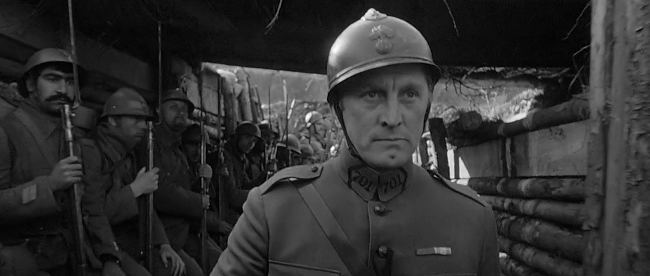
Set during the first World War, Paths of Glory follows Kirk Douglas’ Colonel Dax as he’s forced to defend three of his soldiers against a charge of cowardice. Director Stanley Kubrick, working from a script cowritten with Calder Willingham and Jim Thompson, kicks Paths of Glory off with an admittedly less-than-engrossing stretch, as the movie boasts (or suffers from) a somewhat talky first act that doesn’t contain much in the way of compelling elements – although, by that same token, it’s clear that the film benefits substantially from Kubrick’s stellar directorial choices and a host of above-average performances. (In addition to Douglas’ consistently riveting turn as the moral protagonist, Paths of Glory features stirring supporting work from, among others, Adolphe Menjou, George Macready, and, delivering the movie’s most entertaining performance, Joseph Turkel.) There’s little doubt, then, that the picture improves substantially once it progresses into its admittedly erratic yet often riveting midsection, with the emphasis on the aforementioned soldiers’ court martial perpetuating the engrossing atmosphere and paving the way for an unexpectedly spellbinding (and undeniably grim) final stretch. The strong, decidedly unconventional conclusion confirms Paths of Glory‘s place as a fairly striking drama from Kubrick, with the film ultimately faring better than the director’s next few (and far more well-known) endeavors.
***1/2 out of ****
Leave a comment
You must be logged in to post a comment.