
Pi
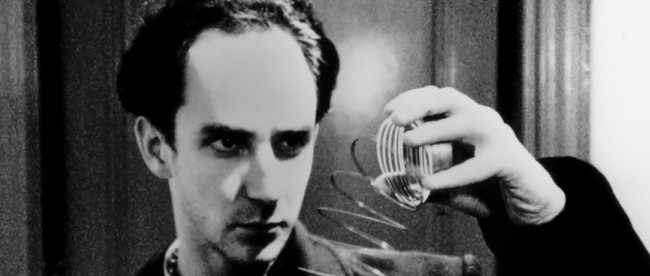
Though stylish and sporadically intriguing, Pi is, by and large, a frustrating and maddeningly confounding piece of work that has inexplicably acquired a fairly substantial cult following in the years since its 1998 release. Director Darren Aronofsky’s decision to employ grainy black-and-white cinematography admittedly suits the off-kilter material, but there’s little doubt that the headache-inducing visuals ultimately cements the film’s status as a thoroughly interminable experience. The inscrutable storyline revolves around an anti-social mathematics whiz named Max (played by Sean Gullette) as he finds himself embroiled in a far-reaching conspiracy, the entirety of which may or may not be a product of his crumbling mental state. Aronofsky’s screenplay is teeming with references to a whole host of mathematical formulas and theories, and there’s consequently no denying that Pi all-too-often comes off as a particularly baffling academic lecture. That Gullette is trapped within the confines of an egregiously unsympathetic character certainly doesn’t help matters, nor does the increasingly preposterous and flat-out irritating storyline (which, even within the context of the film, feels forced and unnatural). Aronofsky’s talent is not in question – there are a number of genuinely compelling moments contained within Pi‘s running time, including a De Palmaesque sequence in which the camera circles around Max as he paces his cramped apartment – but there’s just no way to overlook the film’s many deficiencies (the head-scratching conclusion is merely the final straw).
*1/2 out of ****
Leave a comment
You must be logged in to post a comment.